In September 2026, Reuters reported that SK Hynix, through its US subsidiary Solidigm, was considering building a NAND flash memory manufacturing facility in the United States. Upstate New York was identified as a leading candidate, although no final investment decision had been announced.
On the surface, this appears to be another semiconductor manufacturer responding to pressure from Washington to bring chip production back to American soil. That is certainly part of the story, but looking at several other developments in the flash memory industry suggests something more is going on.
Three factors deserve closer attention: the geographic redistribution of semiconductor manufacturing, the growing importance of enterprise NAND storage, and a changing competitive environment that could eventually affect NAND pricing and availability.
Taken together, these developments suggest SK Hynix may be positioning its NAND business for a different global market than the one we have today.
Moving NAND Manufacturing Is About More Than Geography
Solidigm is an American company headquartered in California, but its primary NAND manufacturing operation is located in Dalian, China. This arrangement dates back to SK Hynix’s acquisition of Intel’s NAND memory and SSD business, a transaction announced in 2020 for approximately $9 billion.
The acquisition gave SK Hynix an established enterprise SSD business along with manufacturing capabilities in China. At the time, this was a logical expansion of the company’s NAND operations.
Today, the geographic arrangement creates a different set of challenges.
The United States continues to tighten restrictions involving advanced semiconductor manufacturing equipment and technology exports to China. Meanwhile, Washington is encouraging foreign semiconductor companies to establish more manufacturing operations within the United States.
For SK Hynix, having a significant NAND manufacturing operation in China introduces uncertainty surrounding future equipment upgrades, manufacturing expansion, and international trade policy.
A factory in the United States could reduce some of those risks by establishing an additional manufacturing location outside China.
There is an important distinction here. Building a new factory does not necessarily mean SK Hynix intends to close or relocate its existing Dalian operation. The company may simply want more flexibility in where it manufactures NAND.
From a supply-chain perspective, that flexibility has value. Manufacturers that depend on one geographic region for critical production can become vulnerable when political or trade conditions change.
The question is whether a future US factory would create additional NAND manufacturing capacity or eventually replace production that already exists elsewhere. Those are two very different outcomes for the global flash memory market.
Enterprise SSD Demand Is Changing the NAND Business
Another factor is the growing importance of enterprise solid-state storage.
Solidigm is not primarily a supplier of inexpensive USB flash drives or consumer microSD cards. Its business concentrates on enterprise SSD products used in servers, cloud infrastructure, and large data centers.
This is particularly relevant as artificial intelligence infrastructure continues to expand.
Much of the attention surrounding AI semiconductor demand has focused on high-bandwidth memory, or HBM. This specialized DRAM is used alongside advanced processors to support the enormous bandwidth requirements of AI workloads.
However, those same computing environments also require substantial amounts of nonvolatile storage.
Training datasets, model checkpoints, and other large collections of information must be stored somewhere. Enterprise SSDs provide the high-capacity storage infrastructure needed to support many of these operations.
Solidigm has developed high-capacity SSD products using QLC NAND technology. QLC stores four bits of information per memory cell, allowing manufacturers to increase storage density compared with TLC NAND, which stores three bits per cell.
The tradeoff is that QLC generally offers lower write endurance than TLC. For applications where storage capacity and cost per terabyte are more important than frequent rewriting, QLC can be an appropriate choice.
This creates an interesting situation for the broader flash memory industry.
A manufacturer producing NAND for enterprise SSD applications may have different priorities than one supplying NAND components for consumer products. Enterprise storage can offer attractive margins, particularly when demand for high-capacity products is strong.
Consequently, growing enterprise demand can influence how manufacturers allocate production capacity.
This does not mean USB flash drives and microSD cards will suddenly become unavailable. It does mean that demand from data centers can influence NAND pricing and supply even when demand for consumer flash products has not changed significantly.
This relationship was examined in an earlier article, AI Didn’t Increase SSD Demand, It Stole SSD Supply, which discusses how expanding AI infrastructure can redirect available storage resources toward enterprise applications.
For companies purchasing NAND components, the distinction between consumer demand and enterprise demand is becoming increasingly important.
A Potential Solidigm IPO Adds Another Dimension
Just one week after the original factory report, Reuters published another development involving Solidigm.
On September 25, Reuters reported that SK Hynix was considering an initial public offering of Solidigm as early as 2027. According to people familiar with the discussions, the transaction could value the business at up to $150 billion and potentially raise approximately $15 billion.
Those are preliminary figures, and neither the IPO nor its proposed valuation has been confirmed.
Nevertheless, the possibility changes how the factory announcement should be interpreted.
An independent stock market listing could provide Solidigm with access to substantial investment capital. That capital could support manufacturing expansion, product development, and other long-term business objectives.
It could also establish a separate market valuation for Solidigm, rather than having its business valued entirely within the larger SK Hynix organization.
Consider the sequence of events. SK Hynix acquired Intel’s NAND business for approximately $9 billion. Several years later, the company is reportedly evaluating a US manufacturing facility while also considering a public offering that could value the subsidiary at a substantially higher amount.
A proposed valuation is not the same as an actual sale price, and the final value of any IPO would depend on market conditions. Still, the difference illustrates how investor expectations surrounding enterprise storage and AI infrastructure have changed.
It is also important not to assume that proceeds from a potential IPO would automatically finance the proposed New York factory. No such allocation has been confirmed.
What the two announcements suggest, however, is that SK Hynix is examining several ways to strengthen Solidigm’s position within the global NAND industry.
Chinese NAND Competition Cannot Be Ignored
While SK Hynix evaluates manufacturing options in the United States, semiconductor manufacturers in China continue developing their own memory technologies.
YMTC is already an established NAND flash manufacturer and has been working to improve its manufacturing processes and product capabilities.
As discussed in our earlier coverage, YMTC Has Become a Legitimate Global NAND Competitor, Chinese NAND manufacturers are no longer simply pursuing low-cost alternatives. They are developing increasingly competitive technology that established manufacturers must account for.
More recently, Reuters reported that CXMT, a Chinese company primarily associated with DRAM manufacturing, was considering entering the NAND market through a research and development production line in Beijing.
Developing a competitive NAND manufacturing process takes time. Announcing an R&D production line is not equivalent to operating a high-volume commercial factory.
Nevertheless, additional competitors could eventually change the supply balance.
Historically, the NAND industry has experienced significant pricing cycles. When demand is strong and manufacturing capacity is limited, prices increase. When manufacturers expand production and supply begins exceeding demand, prices can decline rapidly.
Additional Chinese manufacturing capacity could place downward pressure on NAND prices over time, particularly if production grows faster than demand.
There is also the possibility that Chinese manufacturers concentrate on domestic customers while established manufacturers prioritize enterprise and international markets.
In that environment, the global NAND business could become more geographically divided, with different manufacturing ecosystems serving different customers.
For USB flash drive, SD card, and microSD manufacturers, these developments matter because NAND component costs remain a major factor in finished product pricing.
A new competitor does not guarantee lower prices. However, additional manufacturing capacity and increased competition have historically been important factors in the NAND pricing cycle.
The Timing Introduces Another Risk
One issue that should not be overlooked is how long it takes to establish a semiconductor manufacturing facility.
Building a NAND fabrication plant requires significant capital, specialized manufacturing equipment, process development, and extensive qualification before commercial production can begin.
A factory proposed during a period of strong demand may not begin producing chips until several years later.
By then, market conditions can be considerably different.
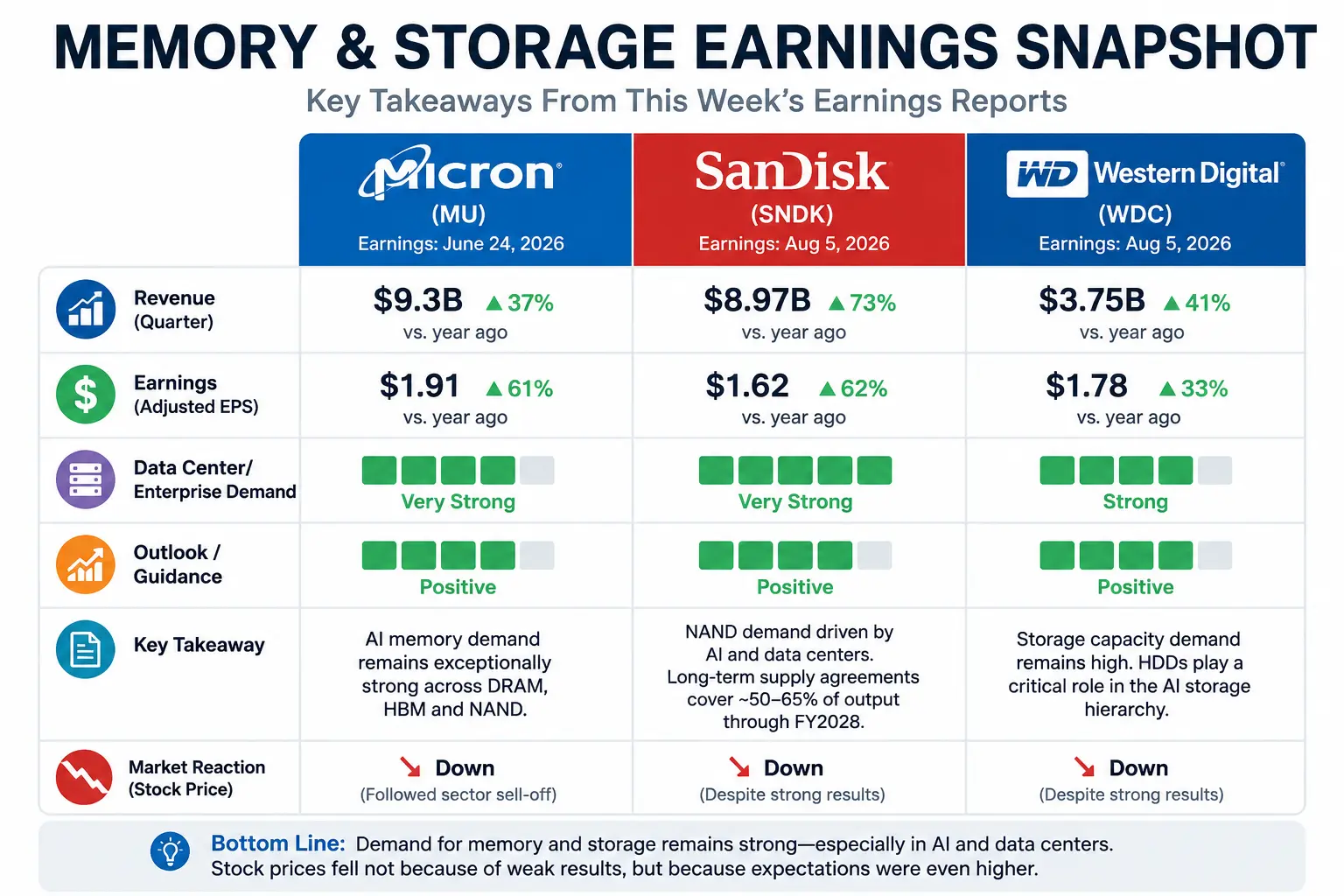
As recently as October 2026, memory manufacturers have been benefiting from strong demand and elevated semiconductor pricing. At the same time, financial markets have begun questioning whether the enormous investments in AI infrastructure will produce the expected long-term returns.
This does not necessarily indicate that AI-related NAND demand is about to decline. It does demonstrate how quickly expectations can change.
If multiple manufacturers expand NAND production simultaneously, new capacity could arrive at a time when demand growth has slowed.
Conversely, if enterprise storage requirements continue increasing, additional capacity may be absorbed without creating a significant oversupply.
This uncertainty is one reason semiconductor manufacturers must be careful when committing billions of dollars to new fabrication facilities.
What Does This Mean for the Flash Memory Industry?
For the companies purchasing NAND components and manufacturing finished flash storage products, the immediate impact of these announcements is probably limited.
There is no confirmed Solidigm factory construction schedule, no announced production capacity, and no indication that NAND manufactured at a future US facility would be available to consumer flash product manufacturers.
The longer-term implications are more interesting.
If Solidigm establishes a US manufacturing operation, it could reduce geographic concentration within its NAND supply chain. If the company completes a public offering, it may gain additional financial resources to expand its enterprise storage business.
At the same time, increasing competition from Chinese manufacturers could influence global NAND supply and pricing.
These developments are connected, but they do not necessarily move in the same direction.
Enterprise demand could keep NAND pricing elevated while additional manufacturing investments are underway. Several years later, those same investments could contribute to oversupply if demand fails to keep pace.
For USB flash drive and memory card manufacturers, this is an important distinction. Strong NAND demand does not always translate into strong demand for finished consumer flash products, yet it can still affect the cost of manufacturing them.
Final Thoughts
The initial Reuters report described a potential NAND manufacturing facility in New York. Viewed independently, it is another example of semiconductor companies evaluating US production.
Looking at the broader situation, the story becomes more interesting.
SK Hynix is managing the geographic risks associated with manufacturing in China, positioning Solidigm to benefit from growing enterprise storage requirements, and evaluating financial options that could significantly expand the subsidiary’s resources.
Meanwhile, Chinese manufacturers are developing additional memory capabilities, and the NAND industry continues operating within its familiar cycle of expansion, demand growth, and potential oversupply.
None of these developments guarantees a particular outcome for NAND pricing or availability.
However, they suggest that the decisions being made today could influence where NAND is manufactured, which customers receive priority, and how the flash memory market develops over the next several years.
The proposed US factory may ultimately be just one piece of a much larger restructuring of the global NAND industry.
Sources and Further Reading
- Reuters, September 18, 2026 — SK Hynix’s Solidigm unit is weighing NAND memory chip factory in US.
- Reuters, September 25, 2026 — Reporting on a potential Solidigm IPO and valuation.
- Reuters, October 7, 2026 — Reporting on Samsung earnings and AI-related memory demand.
- Reuters, October 13, 2026 — Reporting on semiconductor stocks and AI infrastructure investment concerns.
Editorial Note: This article examines publicly reported developments in NAND flash manufacturing, semiconductor supply chains, and enterprise storage demand. Industry analysis is based on established flash memory technology, manufacturing economics, and published reporting. Proposed investments, valuations, and future market outcomes are identified as preliminary or uncertain where applicable. The purpose is to provide technical context and explain potential implications for the flash memory industry.