Sandisk and Western Digital released their latest quarterly earnings this week, giving the storage industry another look at how artificial intelligence, data center construction and higher-capacity storage requirements are affecting demand. The numbers were strong. The stock market reaction was not.
That contradiction is probably the most useful part of the story.
Sandisk Reports Strong NAND Flash Growth
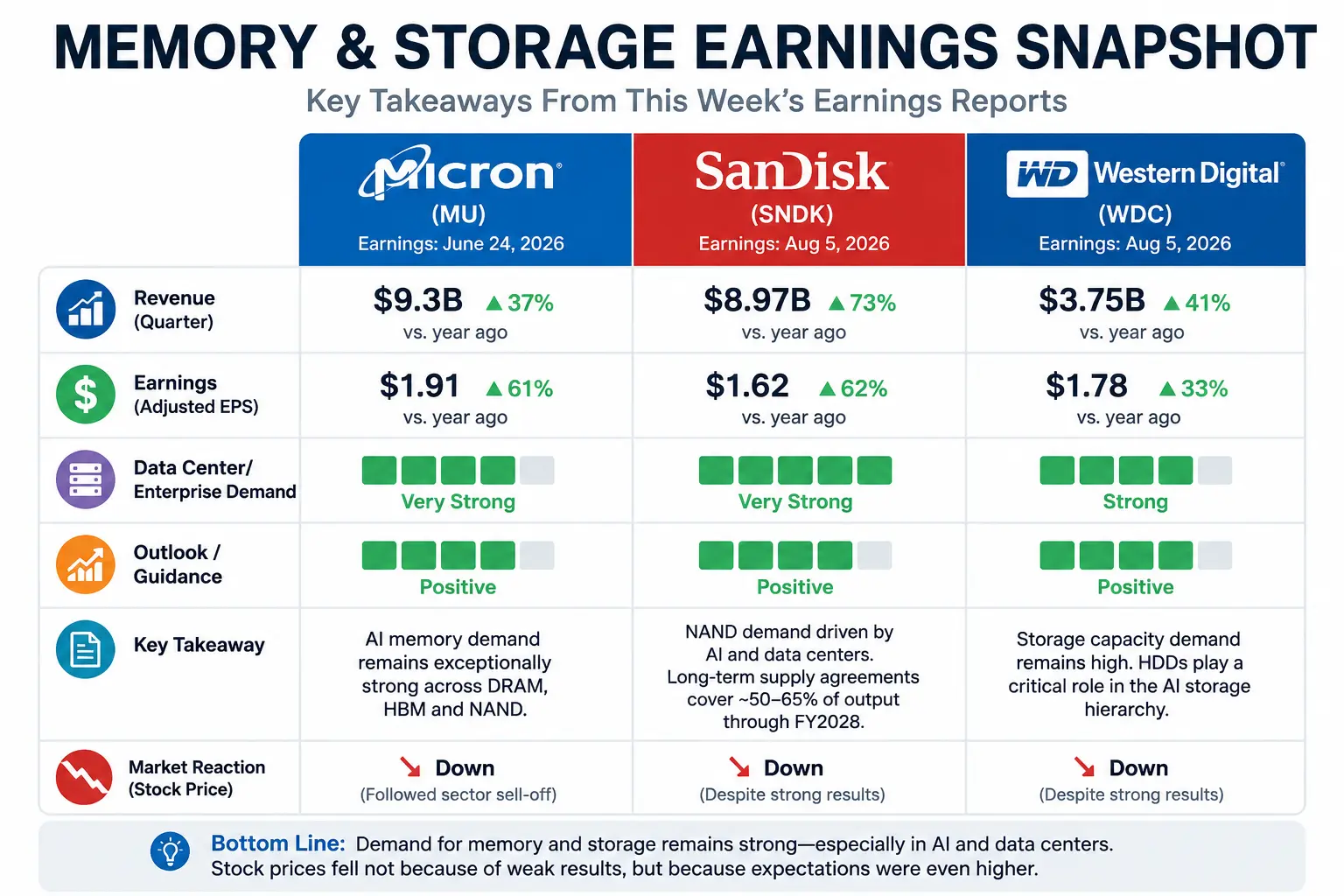
Sandisk reported fiscal fourth-quarter revenue of approximately $8.97 billion, comfortably ahead of Wall Street expectations. Adjusted earnings also exceeded estimates, while the company projected revenue between $10.3 billion and $10.8 billion for the following quarter.
The standout area was data center storage. Sandisk reported approximately $2.97 billion in data center revenue, more than double the amount reported one year earlier. Demand for enterprise solid-state storage continues to benefit from the enormous amount of data being created, moved and retained by AI systems.
Sandisk is also trying to make the traditionally unpredictable NAND flash business a little less unpredictable. The company said it now has eight longer-term supply agreements with six customers, representing approximately $93.9 billion in contracted business. About half of its output for the fiscal year ending in July 2027 is expected to be covered by these agreements, increasing to roughly two-thirds during fiscal 2028.
That is an important change. NAND manufacturers have historically expanded production when prices were high, created too much supply and then watched pricing fall apart. Longer customer commitments may help smooth that cycle, although they will not eliminate it entirely.
Western Digital Shows Storage Capacity Still Matters
Western Digital also reported better-than-expected results, with quarterly revenue of approximately $3.75 billion, an increase of more than 40 percent from the prior year. The company projected revenue between $4.0 billion and $4.2 billion for the next quarter.
Since the separation of Sandisk, Western Digital is primarily a hard disk drive company rather than a NAND flash manufacturer. Its results therefore tell us something slightly different. They show that the AI storage boom is not limited to expensive flash memory and high-performance enterprise SSDs.
AI infrastructure needs fast memory close to the processors, but it also creates enormous amounts of information that must eventually be stored somewhere. Much of that less-active data will continue moving onto high-capacity hard drives because the cost per terabyte remains difficult to beat. Flash and hard drives are not replacing one another in this market. They are filling different positions within the same expanding storage hierarchy.
Why Did Both Stocks Fall?
Despite the strong results, shares of both companies declined following their reports. This was not because storage demand suddenly disappeared. Investors had already pushed memory and storage stocks dramatically higher, and expectations had reached the point where merely beating financial estimates was no longer enough.
Sandisk offered a healthy outlook, but some investors expected faster pricing growth and even larger profit margins. Western Digital also issued guidance above typical analyst estimates, but the market had apparently prepared itself for something more spectacular. Wall Street wanted fireworks and received a very profitable storage business instead.
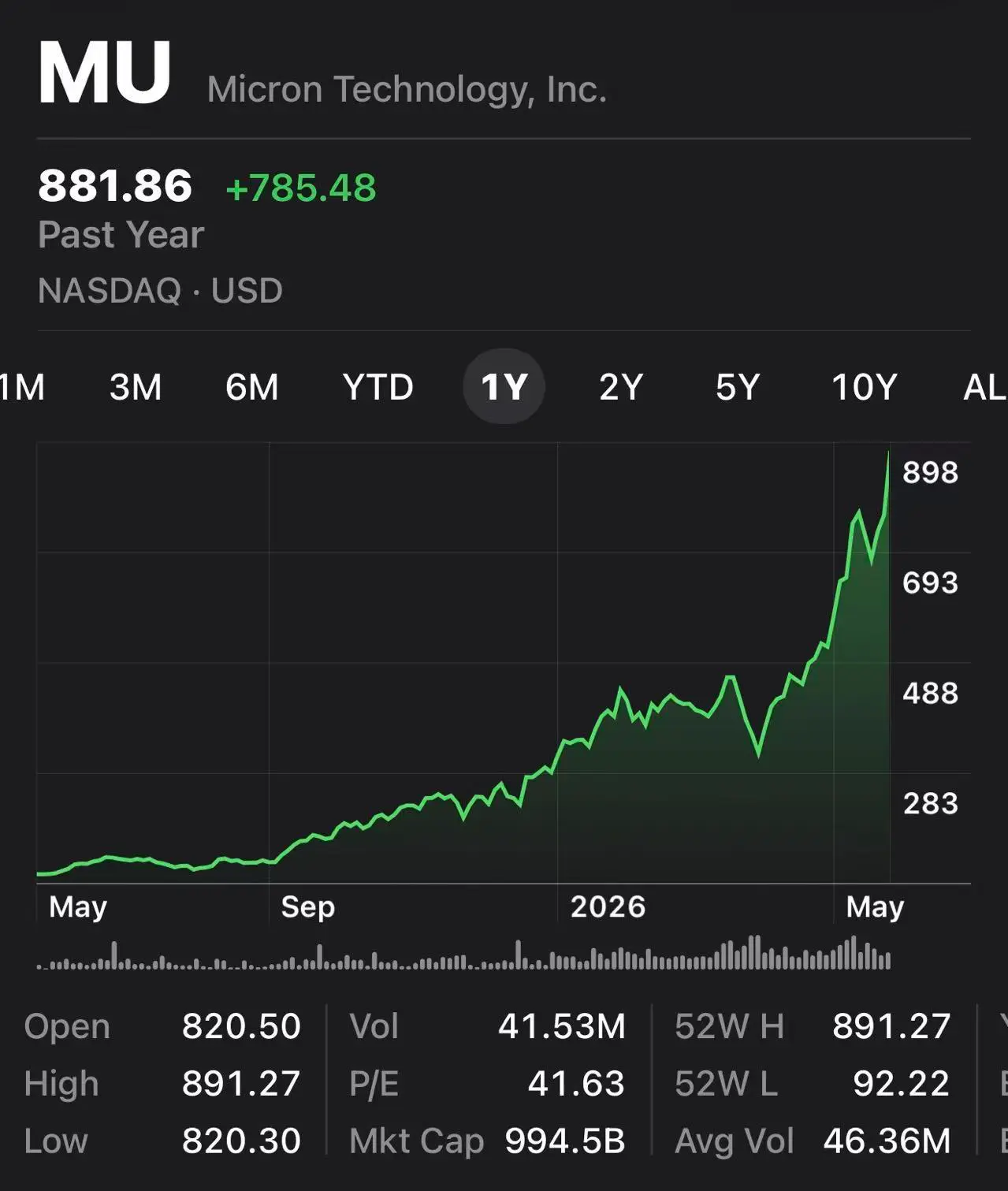
Micron did not release earnings this week, although its shares moved with the broader memory group. Its most recent report was issued on June 24 and showed the same basic industry direction: unusually strong demand for DRAM, high-bandwidth memory and NAND products used in AI infrastructure.
What This Means for the Flash Memory Market
The earnings calls support the view that NAND demand remains strong, particularly for enterprise SSDs and data center applications. They also suggest that manufacturers are attempting to maintain supply discipline rather than immediately flooding the market with new production.
For buyers of USB flash drives, memory cards and other removable storage products, this does not necessarily mean an immediate shortage. Consumer products represent only one part of the NAND market, and pricing at the device level also depends on controller availability, packaging, inventory and the grade of memory being purchased.
However, the reports provide little evidence that NAND pricing is about to collapse. Data center customers are absorbing more production, long-term agreements are reserving future capacity, and manufacturers have good reason to avoid the aggressive overproduction that damaged the market during earlier cycles.
The practical conclusion is less dramatic than the stock-price movement. Storage demand is still growing, AI infrastructure continues to consume both flash memory and high-capacity hard drives, and the underlying market remains healthy. The warning is that expectations have become extremely high. Strong growth is no longer surprising. The market now expects nearly perfect growth, which is a much harder standard for any manufacturer to maintain.
Industry note: This article is based on financial results and earnings guidance released by Sandisk and Western Digital on August 5, 2026. Micron’s most recent quarterly results were released on June 24, 2026 and are referenced only for broader memory-market context.