Author Archive

Mike McCrosky

Kicking around in technology since 2002. I like to write about technology products and ideas, but at the consumer level understanding. Some tech, but not too techie. Posting on Quora.com as well.

Lexar Intro’s New 1TB SD Card 10 Years After 1GB SD Card

Almost fifteen years ago Lexar announced it’s first 1GB SD card. Today Lexar announces their first 1TB SD card. My, how times have changed. A one GB card ten years ago cost about $125 and difficult to find at that capacity. The 1TB card announced today is $499.

If the price difference isn’t a big enough shock to you, consider the storage capacity increased this much, yet the form factor of the SD card has not changed.

This new Lexar card is a Class 10 device with transfer speeds over 95MB per second. Ideal for newer cameras capturing video in 4K.

Lexard 1TB SD Card

About Lexar:

Continue Reading

SlideShare – USB Duplicator, USB115SA by Nexcopy

SlideShare Highlight: Nexcopy USB115SA USB Duplicator

USB Duplicator by Nexcopy, Model USB115SA

The Benefits of the USB115SA Duplicator

Efficiency: USB duplicators streamline production by allowing simultaneous data copying to multiple drives. This saves time and reduces manual effort, especially when dealing with large batches.

High-Speed Duplication: Depending on the model, USB duplicators can copy data at impressive speeds, enabling large-scale distribution of content in minutes rather than hours.

Batch Processing: Ideal for distributing software, training material, or marketing content, these systems enable duplication of many USB drives in a single pass.

Plug-and-Play Operation: Most USB duplicators require minimal setup, offering user-friendly operation with no additional software installations for basic use.

Versatility: Support for USB 2.0, USB 3.0, and USB-C media ensures flexibility across a wide range of devices and applications.

Customization: Options such as serialization or branded preloads give businesses the ability to personalize content delivery.

Data Security: Features like write-protection and copy-protection help safeguard proprietary or sensitive information.

Cost-Effectiveness: By reducing labor, minimizing errors, and accelerating turnaround, USB duplicators can lower long-term distribution costs.

The SlideShare presentation introduces the Nexcopy USB115SA system, aligned with the USB-IF specification.

Nexcopy USB115SA USB duplicator system

About Nexcopy

Nexcopy Inc. is a Southern California–based company founded in 2008, recognized for digital media duplication solutions. Their product range includes USB duplicators, SD and microSD duplicators, and CF card duplicators.

Product Portfolio: Nexcopy systems serve industries from education and corporate training to content distribution and government. With models ranging from small setups to high-volume standalone units, they cover a broad set of needs.

Innovation: Nexcopy integrates features like serialization, write-protection, and advanced copy modes into their systems. Their Drive Manager software provides control, reporting, and customization for duplication tasks.

Focus on Security: Copy-protection and secure duplication functions help organizations distribute content without compromising confidentiality.

Customer Support: Nexcopy offers training, technical assistance, and responsive service to maximize the effectiveness of their products.

Global Reach: With authorized distributors worldwide, Nexcopy ensures accessibility of its systems across multiple regions and industries.

Trusted for reliability and innovation, Nexcopy remains a strong partner for organizations seeking professional-grade data duplication and protection solutions.

Continue Reading

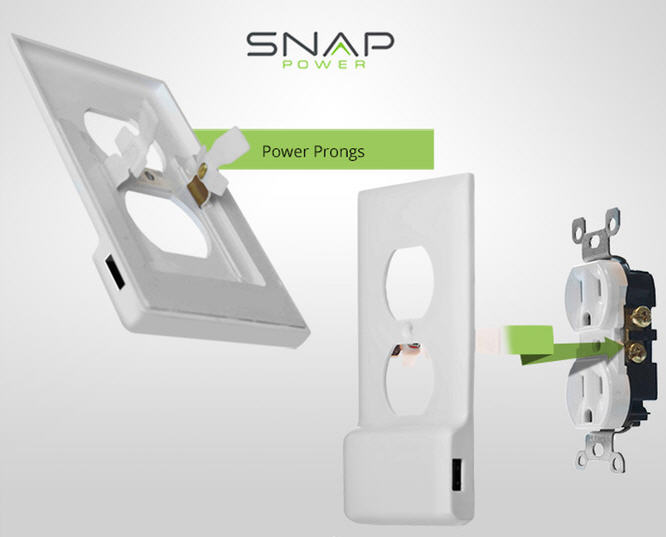
Snap Power USB Charger

You know a product is a great idea when a couple of pictures describe the entire product. With that in mind, we’ve all seen wall outlet USB charges, but the Snap Power, in my opinion, will rule them all. The design is clever. Installation is ultra-easy. Accessibility supersedes all others. Take a second and just look at it:

In my mind there are three things which make this a brilliant wall charger. If you don’t mind me walking you through the obvious, here we go.

Or skip the highlights and jump right over to their website:

The design is brilliant. The User keeps both outlets available for normal use while a sleek looking USB port is added underneath. At the time of this article there is one USB socket, but visiting their website you can see two sockets, one on either side. They are constantly improving.

Installation is very easy. Simply unscrew your current face-plate and replace it with the Snap Power face-plate. You can see from the picture below the screws used on the outlet behind the face-plate is what provides the juice for the Snap Power USB port. They have a patent on this, so it’s definitely a fresh idea.

I think the final point on why this USB charger is the end-all, be-all is the slim design. Take a look at

Continue Reading

Flash Memory – Price is Rising, This Might Explain Why

In recent weeks the cost of flash memory has increased substantially.  The commodity product, is for the most part, a stable consumable with pricing that fluctuations in single digit percentages.  However, lately the price has increase between 10-30%.  As with any product there are variables which contribute to price and the following information might help explain why flash memory is getting more expensive.
 
 
Continue Reading

Exceria Pro From Toshiba is New CF Card Format – Ultra Fast

Toshiba Launches Exceria Pro CompactFlash Cards for Ultra-Fast DSLR Performance

Toshiba announced the launch of a new line of CompactFlash (CF) memory cards, the Exceria Pro series, specifically targeting the DSLR (digital single-lens reflex) market. The new cards are compatible with CF Revision 6.0 and promise performance even higher than the XQD format, previously developed by Nikon and Sony as a proprietary standard.

The initial lineup of 16GB, 32GB, and 64GB models was scheduled for release in Q2 2013 and boasted the world’s highest read speeds (up to 160MB/s) and write speeds (up to 150MB/s) at the time. Exceria Pro was designed to meet the growing demands of the high-end DSLR market, including high-resolution image capture, sustained continuous shooting, HD video recording, and rapid transfers to other devices.

Toshiba Exceria Pro CompactFlash memory card

Fully compliant with the UDMA7 high-speed interface, these CF cards deliver the speed required for professional DSLRs and video applications. Users working with VPG-20 standards for video capture will particularly benefit from this increased performance.

Data transfer speed for CF memory cards

Market analysts at the time predicted that the CF card market would grow by as much as 50% between 2012 and 2015. With such momentum, Toshiba’s Exceria Pro stood as a well-positioned choice for professionals seeking speed and reliability. For production environments, this high-speed card also paired naturally with equipment like the Nexcopy CF Duplicator, offering an efficient way to manage bulk content loading.

Where Toshiba’s Exceria Pro CF Cards Stand Today

Toshiba’s Exceria Pro CompactFlash line landed in 2013 with headline numbers—up to 160 MB/s reads and 150 MB/s writes—that squarely targeted pro DSLR shooters. A decade later, the ground has shifted. The CompactFlash ecosystem has largely given way to CFexpress and fast SD variants, and Toshiba’s original CF product pages have disappeared in favor of newer media under the Kioxia brand (the company that now houses Toshiba’s former memory business). You can still find Exceria Pro CF cards through third-party sellers and residual retail listings, but there’s no evidence of active, first-party promotion or ongoing line refreshes. In other words: the product survives as legacy stock for customers keeping older bodies and workflows alive, not as a current strategic focus.

Sales mirror the broader media transition. As camera makers moved high-end bodies to CFexpress for 4K/8K video and faster burst buffers, demand for new CompactFlash SKUs shrank. That shift doesn’t render existing Exceria Pro cards useless—far from it. For studios and institutions running dependable CF-based bodies, the cards remain serviceable and appropriately quick for stills and 1080p/early-4K pipelines. But the growth energy in removable media has moved on, and most procurement today prioritizes CFexpress, UHS-II SD, and the reader infrastructure that goes with them.

A quick corporate note helps explain the branding changes. Toshiba’s flash memory unit—historically the inventor of NAND—was spun out and sold to a Bain-led consortium, then rebranded as Kioxia in 2019. Kioxia and Western Digital continue to co-produce NAND and set the pace on next-gen nodes; the Toshiba Corporation that remains is now a privately held conglomerate after delisting from the Tokyo Stock Exchange in December 2023. Practically, that means legacy “Toshiba” memory cards you see today represent earlier eras of the portfolio, while new removable media and SSDs arrive under Kioxia or partner labels.

For readers who track the business side: Toshiba no longer has a public ticker after the 2023 buyout. Kioxia—the memory company that evolved from Toshiba Memory—now trades in Tokyo. As of September 22, 2025, Kioxia Holdings (TYO:285A) last changed hands at ¥4,820. Treat that as a snapshot, not advice. If you’re deciding between buying remaining Exceria Pro CF cards and migrating to newer standards, the practical test is your camera roadmap. If you’ll keep CF bodies in service for years, stocking a small cache of known-good CF cards and a reliable UDMA-7 reader is sensible. If a body upgrade is on deck, step into CFexpress or high-end UHS-II and avoid sinking costs into a format that the market has moved past.

Continue Reading

CF Duplicator – Press Release – New from Nexcopy Inc.

CF Duplicator – Press Release – New from Nexcopy Inc.

LAKE FOREST, Calif.—Nexcopy Inc., a long-standing leader in flash memory duplication, announced a complete redesign of its CF Duplicator product family. The new systems are available in 15, 30, and 45 socket configurations and are built to tackle the heavy demands of bulk CompactFlash (CF) duplication.

With Nexcopy’s bundled Drive Manager software, users gain access to six different copy modes for maximum flexibility:

  • File Copy
  • Device Copy (Short)
  • Device Copy (Full)
  • IMG Copy
  • Copy Add
  • Unique Data Streaming

New Features and Improvements

  • All-new CF Duplicator design
  • Deep CF sockets with rail guides to reduce bent pins
  • Available in 15, 30, and 45 target systems
  • Auto-detects 110V or 220V input power
  • Bulk read and file extract functions

Nexcopy CF Duplicator system

The new CF Duplicators are built with production environments in mind. Top-loading sockets and extended rail guides streamline the insertion process, virtually eliminating the bent-pin failures that plague high-volume duplication runs.

“Coupling the power of Nexcopy’s Drive Manager software with the new CF duplicator hardware, our systems can handle any requirement from contract manufacturers or fulfillment houses,” said Greg Morris, President of Nexcopy. “With IMG support, unique data streaming, and advanced reporting, we’ve designed these systems to make large-scale duplication both reliable and efficient.”

Each unit supports IMG-based duplication, bit-for-bit verification, and full physical-device cloning. These capabilities make them particularly valuable for bootable CF cards, a common requirement in embedded and industrial systems. The updated CF Duplicators are available now with a starting price of $1,299 (USD).

Where CF Cards Still Matter

While SD and SSD formats dominate consumer markets, CompactFlash remains an active player in professional and industrial spaces:

  • Video and broadcast: Professional cameras and camcorders still rely on CF’s high throughput and durability.
  • Industrial controls: Embedded systems use CF cards for rugged, reliable storage in harsh environments.
  • Medical and scientific: Imaging systems, patient monitors, and diagnostics tools continue to trust CF for stable performance.
  • Gaming and kiosks: Arcade systems and specialized consoles have deployed CF media for years.
  • Data forensics: CF’s structure and resilience keep it useful in recovery and investigative workflows.

For these sectors, bulk duplication remains a daily task—and Nexcopy’s updated CF duplicator line is positioned as the go-to solution.

Source: GetUSB.info

Continue Reading

How To: Turn Nook into Android Tablet – For Non-tech Peeps too!

If you have a Nook color or Nook tablet and have dreamed about hacking it into a full-on blown Android tablet, it’s actually possible! Take things into your own hands with the latest release from the fellows over at Nook 2 Android. It’s a lesser known fact among its general user base that the devices run Android at their core. Even less apparent to the B&N crowd is that you can make those tablets boot and run a stock Android experience. Previously limited to the Android 2.3 Gingerbread experience, Nook 2 Android (N2A) microSD cards now allow the aforementioned devices to boot directly to the same Android 4.1 Jelly Bean experience that comes with phones and tablets.  Specifically, this is a Cyanogenmod port of Android, or the preferred stock UI and features that many modders prefer to employ. In a nutshell, these cards turn the e-readers/tablets into Android tablets, complete with widgets and access to Google Play. If you own one of these two devices and wish to get in on the standard Android love, there are a number of options at your disposal. On one hand you can buy a microSD card already loaded with the bootable OS, with capacities ranging from 8GB ($29.99) up to 64GB ($69.99). On the other hand, you can opt for the $19.99 method which lets you download and install the image on your existing microSD cards. Note that not all cards and capacities may be supported. Whichever route you go, the process of booting to Android 4.1 is not far off! Continue Reading

Toshiba Cuts Flash Memory Output

Toshiba Corp. said Tuesday it has slashed production of NAND flash memory for use in USB drives and memory cards by about 30 percent at its plant in Yokkaichi, Mie Prefecture. It’s the first output cut for the device in about three years. The electronics maker aims to work off inventory and see a recovery in the market amid falling prices for the memory devices due to oversupply. Toshiba last reduced production of NAND flash memories after the 2009 financial crisis touched off a global economic downturn. Continue Reading

Copyright © 2011-2019 by
USB Powered Gadgets and more…
All rights reserved.

SD Card Duplicator Equipment

GetFlashMemory.info has reviewed SD Card Duplicators by Nexcopy.  Our results found the product to be reliable, fast and accurate.

They manufacture both PC connected and standalone systems to fit any type application

Turn your product into a custom USB shape. Right down to the last detail. Click to see over 30 examples of custom shape USB drives.

Twitter One

Twitter Four