Why legacy USB boot support is more about BOT than cylinder and head count
Every so often, a customer will ask about cylinder countA legacy hard drive parameter representing the number of cylindrical tracks on a disk platter., head count, or sector configuration for a USB flash drive. The question usually comes from someone working with older hardware, embedded systems, industrial equipment, BIOS-level booting, or legacy imaging software.
The question makes sense. For decades, hard drives were described using cylinder, head, and sector values. That was how older systems understood where data lived on a spinning disk.
But USB flash memory is not a hard drive.
A hard disk has platters, tracks, and read/write heads. NAND flash does not. Flash memory is organized around pages, blocks, controllers, firmware, error correction, bad block handling, and wear leveling. The USB device may appear to the computer as a “disk,” but inside the device, the storage method is completely different.
This is why most USB flash mass production tools do not provide a setting for cylinder count or head count. Those settings come from the hard disk world. They do not describe the physical structure of NAND flash memory.
In modern flash media, the controller presents storage to the host using logical block addressing. In plain English, the host computer asks for logical storage locations, and the controller decides where that data actually lives inside the NAND. The controller may report compatibility values when needed, but those values are usually translated or simulated. They are not physical geometry.
So if the real goal is boot compatibility on older systems, cylinder and head count are usually not the right place to focus.
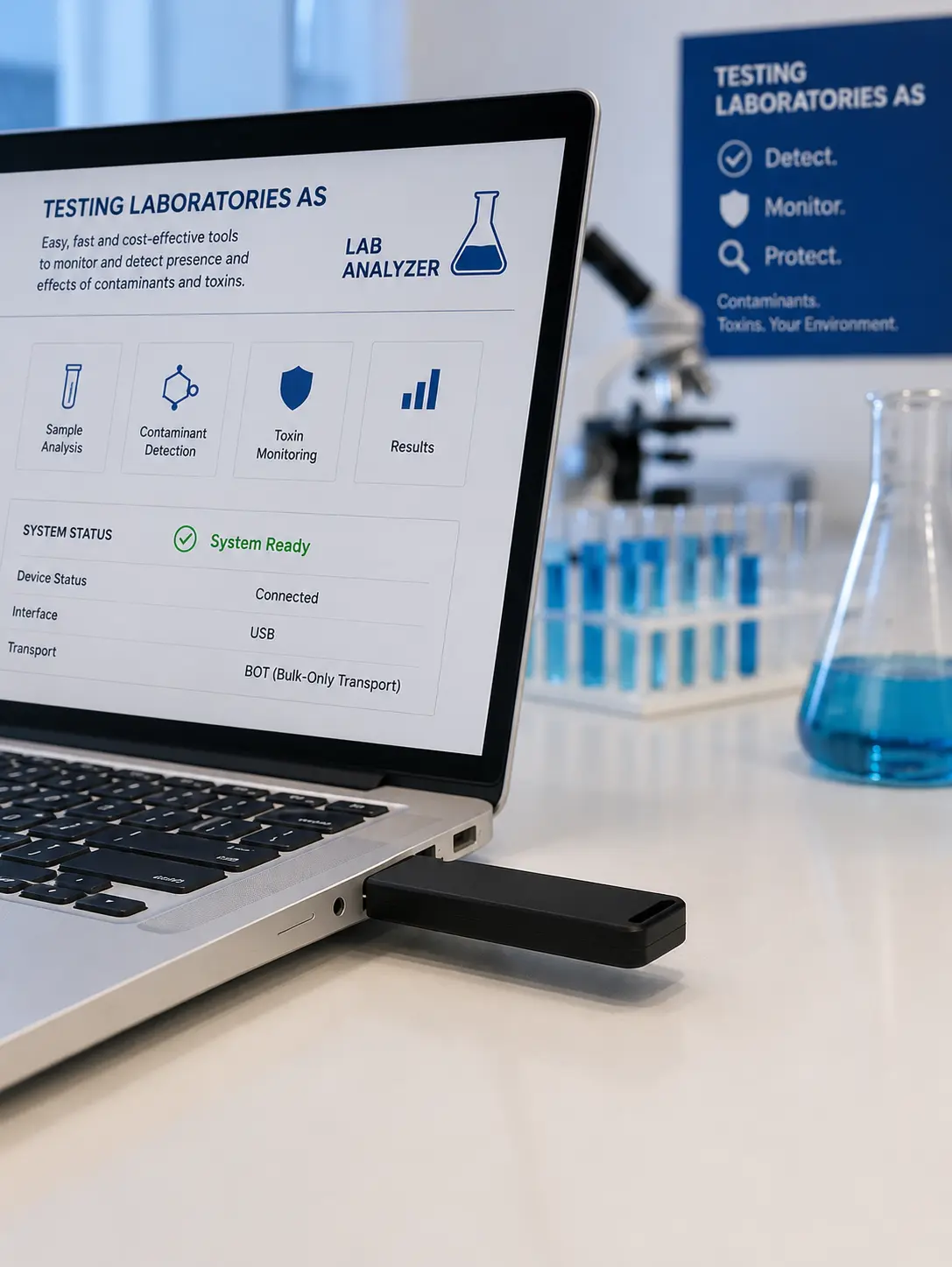
The better question is whether the USB device is using BOTBOT (Bulk-Only Transport) and UASP (USB Attached SCSI Protocol) are two USB data transfer methods, with UASP providing faster speeds and more efficient communication than the older BOT standard. or UASPBOT (Bulk-Only Transport) and UASP (USB Attached SCSI Protocol) are two USB data transfer methods, with UASP providing faster speeds and more efficient communication than the older BOT standard..
| Feature | BOT | UASP |
|---|---|---|
| Era | USB 2.0 dominant | USB 3.x era |
| Queue depth | Single command | Multiple queued |
| Performance | Lower | Higher |
| SSD optimized | No | Yes |
| CPU efficiency | Lower | Better |
| Parallel reads/writes | Limited | Supported |
BOT stands for Bulk-Only Transport. It is the older and more widely compatible USB mass storage method. It has been around for many years and is what most legacy BIOS environments, older boot systems, industrial equipment, and simple embedded platforms expect when they try to boot from USB.
UASP, or USB Attached SCSI Protocol, is the newer method. It is generally faster and more efficient, especially for SSD-style storage and modern operating systems. But faster does not always mean more compatible. UASP was built for newer storage behavior, not for the broadest possible legacy boot support.
That is the key point.
When someone asks about cylinder and head count, the underlying concern is usually not really geometry. The real concern is, “Will this USB drive boot in my older system?”
For that question, BOT is usually the more important factor.
Trying to manipulate cylinder and head count on NAND flash media is often chasing the wrong setting. In many cases, the controller tool does not expose those values because they are not meant to be manually configured. The flash controller handles the logical translation internally.
By contrast, the USB transport behavior can have a real impact. A legacy BIOS or embedded device may understand BOT and fail to recognize or boot properly from a UASP-based device. That does not mean UASP is bad. It simply means UASP is not always the best match for older boot environments.
A good way to think about it is this:
Cylinder and head count describe an old physical disk layout. BOT describes how the USB storage device communicates with the host.
For NAND flash, the communication method is usually more important than old disk geometry.
This is especially true when dealing with industrial equipment, medical devices, kiosks, test systems, bootable utilities, or older PCs. These systems often care less about maximum transfer speed and more about predictable, simple USB mass storage behavior. BOT gives them the familiar path they were designed to understand.
There can always be exceptions. Some systems are picky about partition style, boot sector layout, file system format, removable versus fixed disk reporting, or how the image was written to the device. However, in most cases, if the conversation starts with cylinder and head count, the practical answer is to step back and check the USB mass storage transport first.
We covered the technical differences between BOT and UASP in a separate article on GetUSB.info called Why Some USB Devices Use BOT While Others Use UASP.
Another related topic is how some flash devices can emulate or report themselves differently to the operating system. Our article about using microSD cards as a hard drive also touches on how flash storage can behave differently depending on the controller and configuration.
For USB flash memory, cylinder and head count are mostly legacy terms. They belong to the hard drive era. NAND flash does not have cylinders or heads, and most modern controller tools are not going to expose those settings because there is nothing physical to configure.
For legacy boot support, focus on BOT over UASP. That is usually the setting that matters more.
Pro Tip:
If your legacy BIOS or industrial hardware won’t boot, don’t hunt for cylinder settings. The issue is likely the transport protocol. Focus on using a drive configured for BOT (Bulk-Only Transport), as most older systems cannot communicate with the newer UASP protocol.
About this article: This content was researched and written using a combination of hands-on industry experience, controller-level USB flash memory workflows, and AI-assisted editorial support for structure and readability. Final review, technical direction, and accuracy checks were completed by a human editor familiar with USB duplication systems, flash controller configuration, and legacy boot environments.
The discussion around BOT, UASP, and legacy USB boot behavior comes from real-world deployment conversations involving industrial systems, embedded devices, BIOS-level booting, and USB flash media compatibility testing. While individual systems can behave differently, the article reflects practical observations commonly seen in the field when working with NAND flash storage and older hardware environments.