Samsung Strike Threat Explained: Why the World’s Largest Memory Chip Maker May Walk Off the Job
Samsung is facing one of the biggest labor disputes in its modern history, and even people outside the tech industry are starting to notice. The reason is simple: Samsung is not just a phone company. It is one of the largest producers of memory chips in the world, and those chips now sit at the center of the artificial intelligence boom.
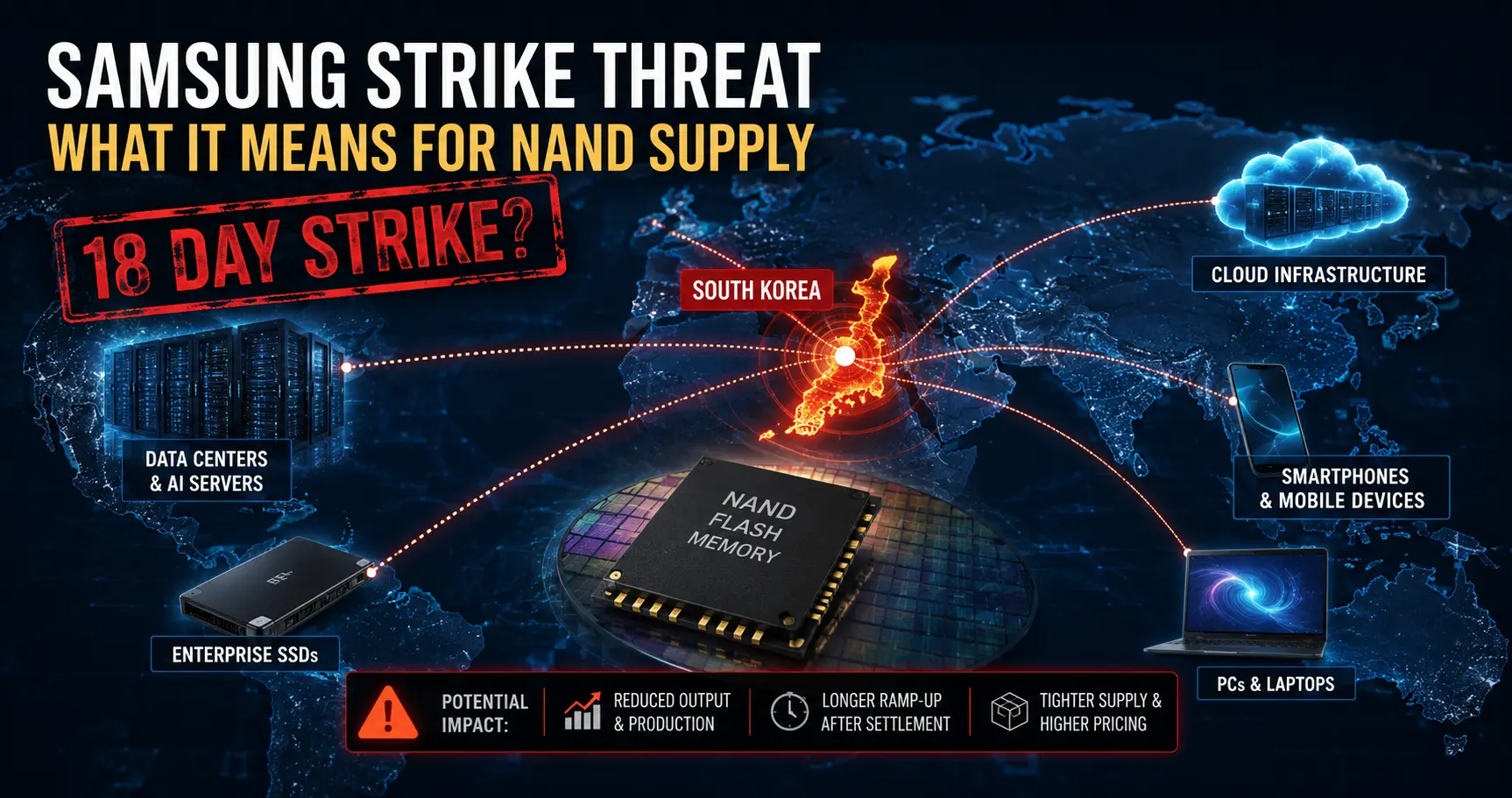
The company is currently dealing with a possible 18-day strike in South Korea involving tens of thousands of workers. While negotiations are still ongoing, the situation has become serious enough that investors, governments, and the technology industry are all watching closely.
For someone outside the semiconductor industry, the headlines can feel confusing. Is this about factory workers? Engineers? Phones? AI? Politics? The answer is a little bit of everything.
What Is Actually Happening?
The strike threat is centered around Samsung Electronics employees in South Korea, particularly workers connected to the semiconductor division. That includes chip fabrication employees, technical staff, engineers, support teams, and some office workers tied to semiconductor operations.
The key issue is compensation.
Samsung workers believe the company benefited enormously from the recent AI surge and growing demand for memory chips, especially products used in AI servers and data centers. Employees argue those profits are not being fairly shared through bonuses and incentive programs.
A major source of frustration comes from comparisons to SK Hynix, Samsung’s largest Korean memory rival. SK Hynix has become one of the biggest suppliers of High Bandwidth Memory, better known as HBM, which is the ultra-fast memory technology used alongside AI processors.
From the workers’ perspective, Samsung is participating in the AI boom while employees feel left behind financially.
Why This Matters More Than a Typical Labor Strike
Most people hear the word “strike” and think about automotive factories, shipping docks, or airlines. Semiconductor manufacturing is different.
Modern chip fabrication facilities operate almost like giant automated laboratories. The buildings are filled with robotic handling systems, wafer processing tools, clean rooms, and highly specialized production equipment that runs around the clock.
Even though much of the process is automated, semiconductor fabs still rely heavily on skilled engineers and trained technical staff to monitor, calibrate, troubleshoot, and maintain operations.
That is especially true for advanced memory production.
- DRAM memory
- NAND flash memory
- Enterprise SSD components
- High Bandwidth Memory used in AI servers
Those products feed directly into AI servers, cloud computing, smartphones, laptops, gaming hardware, and enterprise storage systems.
In other words, this is not a strike at a local appliance factory. These are workers tied to one of the most important supply chains in the global technology economy.
Is Samsung Shutting Down?
Not at the moment.
As of now, the strike has not officially started. Negotiations are still taking place between Samsung management and union leaders. Current reports say Samsung and the union are expected to resume pay talks with a government mediator, while the union has continued to warn that a strike may proceed if meaningful progress is not made.
However, Samsung is reportedly preparing contingency plans inside some manufacturing facilities in case operations are disrupted. That alone tells you Samsung believes the threat is credible.
At the same time, semiconductor manufacturing is highly automated, so even a large labor action may not completely stop production. Some operations may continue, but output, efficiency, maintenance response, and production scheduling could still be affected.
The larger concern is not necessarily a total shutdown. The concern is reduced output, slower production ramps, delayed shipments, and uncertainty during a period when AI-related memory demand is already extremely high.
Samsung Has Not Historically Been a Union Company
One reason this story is getting attention in South Korea is because Samsung spent decades with a reputation for being strongly anti-union.
For years, large-scale labor actions at Samsung Electronics were extremely rare. That changed in 2024 when Samsung workers staged the company’s first meaningful strikes in modern history.
- A one-day walkout in June 2024
- A three-day strike in July 2024
- Later threats of indefinite labor action
While those earlier strikes caused headlines, the impact was relatively limited compared to what could happen now.
The difference today is timing.
The AI industry has exploded. Demand for advanced memory is surging. Samsung is trying to compete aggressively in HBM and advanced semiconductor packaging, and the global market is watching every move the company makes.
That gives workers far more leverage than they had only a few years ago.
Market Impact: Why an 18-Day Strike Could Last Longer Than 18 Days
The most important market point is this: an 18-day semiconductor strike does not always equal only 18 days of lost production.
Memory production is not like stopping and restarting a packaging line. NAND flash, DRAM, and HBM production involve long manufacturing cycles, clean-room controls, tool scheduling, wafer movement, testing, binning, and quality validation. If a fab slows down or reduces output, the lost time can ripple forward.
That means the market impact could come from two directions at once.
- First, fewer wafers and finished memory products may be produced during the strike window.
- Second, even after a settlement, Samsung may need additional time to normalize tool flow, staffing, inspection, testing, and shipment schedules.
So while the strike threat is being discussed as an 18-day event, the real supply impact could extend beyond those 18 days. If production tools are slowed, schedules are rearranged, or wafer starts are reduced, the market may feel the delay later in the form of tighter NAND availability, slower SSD shipments, or firmer memory pricing.
This does not automatically mean a memory shortage will happen. Samsung has inventory, customers have supply agreements, and semiconductor companies plan for disruption. But NAND is a high-volume, timing-sensitive market. When one of the world’s largest memory suppliers faces labor uncertainty, buyers pay attention.
The NAND market could be hit especially hard if the strike overlaps with strong demand from AI storage infrastructure, enterprise SSD orders, mobile device production, or data center purchasing cycles. Even a temporary disruption can become meaningful when the entire supply chain is already running tight.
Readers interested in broader NAND pricing trends can also review our article about memory chip prices spike and how supply discipline has already been tightening the market before this labor situation developed.
For readers newer to flash storage technology, our overview explaining 3D NAND flash memory provides additional background on how modern memory is manufactured and why advanced fabrication facilities are so difficult to pause and restart.
Bottom line: the strike itself may be scheduled for 18 days, but the production effect could last longer. In the memory business, lost fab time does not always come back cleanly the next morning.
The Bigger Picture
This labor dispute is also a reminder of how central semiconductors have become to the modern economy.
A decade ago, a memory chip strike in South Korea might have been viewed as a niche manufacturing story. Today, it affects discussions around AI infrastructure, GPU supply chains, cloud computing growth, enterprise server deployment, memory pricing, and global technology competition.
Put simply, AI systems cannot scale without memory.
Companies like NVIDIA may receive most of the public attention, but advanced memory suppliers like Samsung and SK Hynix have become equally important behind the scenes.
That is why this labor dispute matters well beyond South Korea.
The final outcome is still uncertain. The strike may be avoided through negotiations, reduced to a partial walkout, or delayed by government intervention. But regardless of what happens next, one thing is already clear: Samsung’s labor environment has fundamentally changed, and the semiconductor industry is entering a period where workforce pressure now carries real global economic weight.
Editorial Note: This article was created as an educational overview for readers following developments in the flash memory and semiconductor market. Information was compiled from publicly available reporting, semiconductor industry analysis, and ongoing market observations related to NAND flash memory production and AI infrastructure demand. This content is intended for informational purposes only and should not be considered financial or investment advice.