Yes, Researchers Are Trying It, but No, It’s Nowhere Near Ready for Real-World AI
Every so often a technology story comes along that sounds like science fiction got tired of waiting and decided to show up early.
That is pretty much what happened with the recent headlines about a company growing human neurons on computer chips and talking about “biological computers” and even “biological data centers.” On paper, it sounds wild. In practice, it is still wild, but in a much more grounded, early-stage, scientific-lab kind of way.
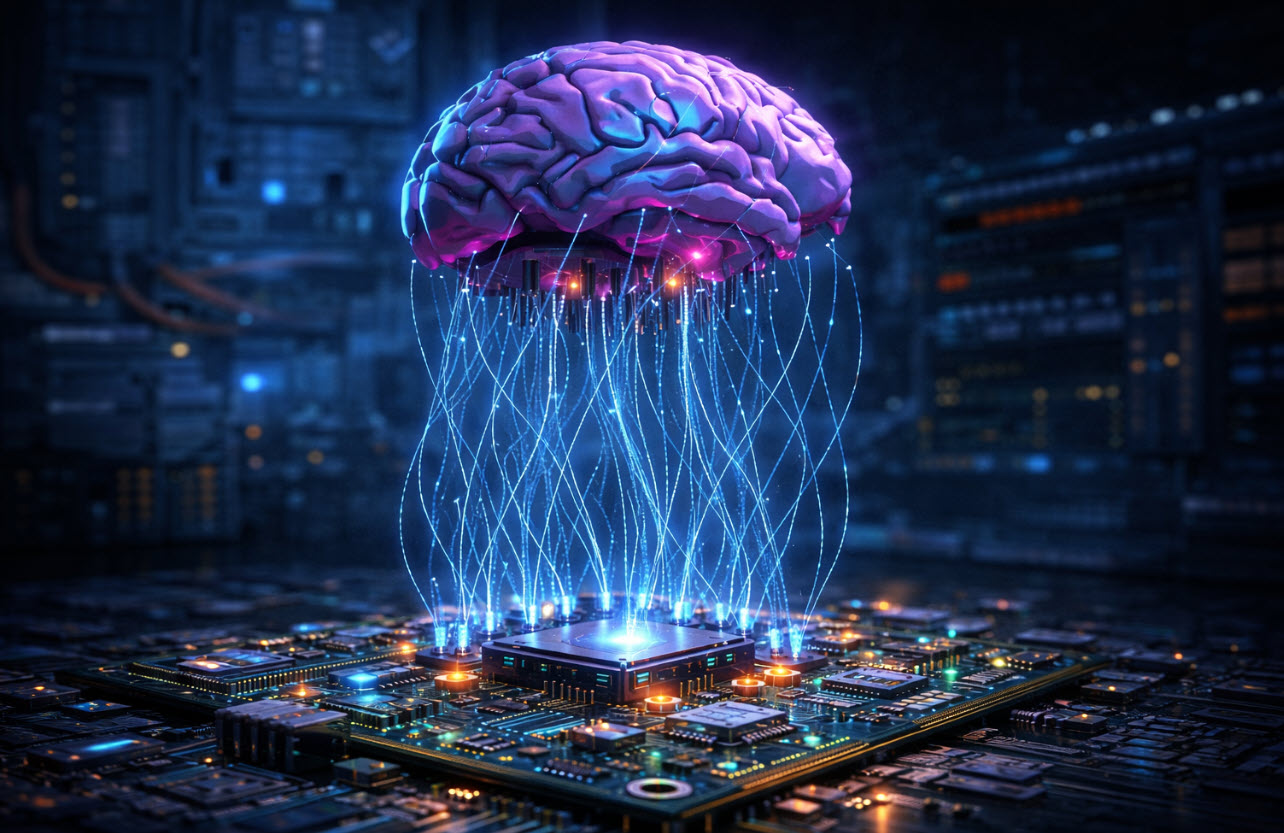
The company behind the attention is Cortical Labs, an Australian biotech startup working on what it calls a biological computer. Their system uses living human neurons grown on a chip, then connected to electronics that can both stimulate the cells and measure how they respond. The dramatic version of the story is that this could someday change computing. The realistic version is that this is a fascinating research platform that may eventually find a place in specialized computing, but it is nowhere near replacing conventional AI hardware.
That difference matters, because this is one of those stories where the headlines can sprint a lot faster than the actual science.
First, what is this thing supposed to be?
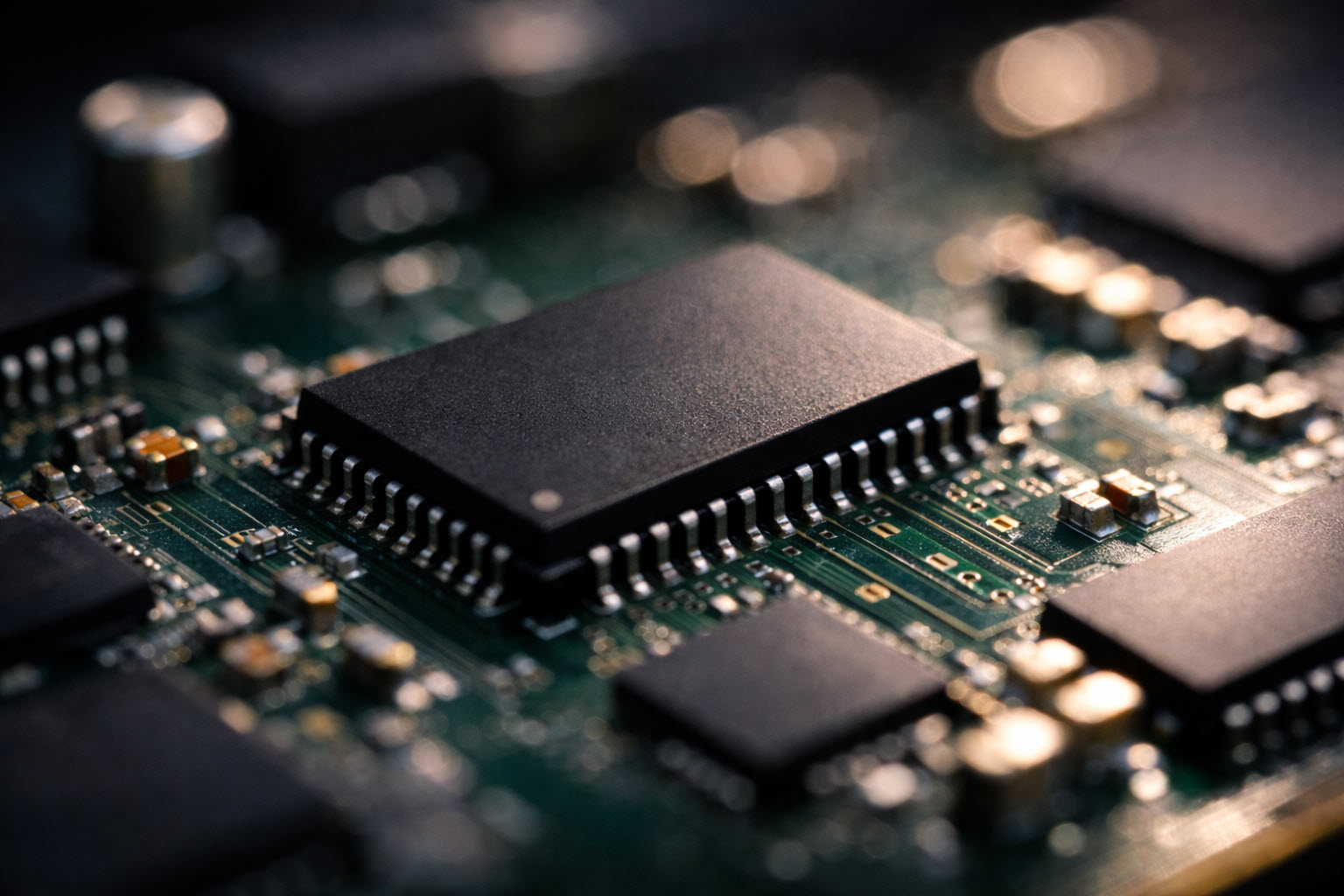
The basic setup is simpler than it sounds. Researchers take living neurons, place them on a chip, and then use electronics to send signals into those cells and record the electrical responses coming back out. So it is not a human brain in a box. It is not consciousness in a server rack. It is a lab-grown network of neurons interacting with a piece of hardware.
If that still sounds like a movie prop, that is fair. But the underlying concept is real. Neurons communicate through electrical activity. Chips can measure electrical activity. So the idea is to build a bridge between biology and electronics, then see whether a living neural network can be guided into doing something useful.
That is the scientific question. The marketing question is whether this can become a new kind of computing platform.
Those are not the same question.
So are they literally gluing brain cells onto chips?
Not with a glue stick, no.
This was one of the funniest and most natural questions to ask, because when people hear “neurons on a chip,” they imagine someone in a lab with tweezers and adhesive doing arts and crafts with brain cells. The reality is more elegant than that.
Researchers usually prepare the chip surface with a biological coating that cells like to attach to. Think of it less like glue and more like making the surface hospitable. Once the surface is treated, neurons can settle onto it, stick, survive, and grow. Over time, they extend connections and form networks across the chip.
So the cells are not being glued down like hardware components. They are being cultured onto a surface designed to support them.
That small detail is actually important, because it tells you what kind of system this really is. It is not manufactured the way a traditional processor is manufactured. It is grown, maintained, and managed more like a biological experiment merged with an electronics platform.
That alone should tell you this is not your next graphics card.
How does a chip actually “read” a brain cell?
This is where the story gets much less mystical and much more understandable.
A chip is not reading thoughts. It is not reading a soul. It is not pulling ideas out of a neuron like a USB file transfer. What it is usually measuring is the electrical activity of the neuron itself.
Neurons work by moving ions across their membranes. When they fire, tiny electrical changes happen around them. If you place very small electrodes near those cells, the electrodes can detect those changes. That is the core idea behind a microelectrode array, which is one of the most common ways to build these systems.
So the process looks something like this: the neuron fires, the electrical environment around it changes, the nearby electrode senses that change, and the electronics amplify and record the signal.
That is a much more useful way to think about it. The chip is not reading one magic molecule inside a brain cell. It is listening for electrical activity from living cells sitting on or near the sensing surface.
In plain English, the chip is acting like a microphone for tiny biological electrical events.
Fine. But how would anyone control this enough to do useful work?
That is the big question, and it is also where a lot of the hype starts to thin out.
The chip does not control the cells the way a transistor controls current in a standard processor. It cannot simply command a neuron to calculate something. What it can do is control the environment around the neurons and influence how the network behaves over time.
That means sending electrical inputs into the network, measuring how the neurons respond, and then adjusting the next round of inputs based on those responses. In other words, it is a feedback loop.
This is why the better way to describe the system is not “programming cells” but “training a biological network.” The setup creates an artificial world for the neurons. The chip provides input. The cells react. The chip records that reaction. Then software changes the input again. After enough rounds, the network may begin to respond in a more useful or consistent way.
That is not the same as programming a GPU. It is closer to conditioning a living system.
This is also why these demos often involve games. A game creates a closed loop. The neurons receive signals representing a changing environment, and researchers can study how the network adapts. That is interesting science. It does not automatically mean the same system is ready to handle enterprise AI workloads.
Could this replace AI computing?
Honestly, no. Not anytime soon.
That does not mean the work is fake. It means the gap between “this is scientifically interesting” and “this can replace Nvidia hardware” is enormous.
Modern AI systems depend on precise, scalable, repeatable math. GPUs are great at that. They do massive amounts of matrix calculations quickly and consistently. A living neuron culture is almost the opposite. It is adaptive, messy, variable, delicate, and influenced by biological conditions that are much harder to standardize than silicon.
That can be a feature in a research lab. It is a problem in a production data center.
So when you hear that biological computing could someday reduce power consumption or handle certain tasks differently, that is worth watching. But when you hear it framed as if racks of wetware are about to shove conventional AI chips out the door, that is where the brakes need to come on.
This is not going to replace Nvidia anytime soon.
That line is not meant as a cheap joke. It is the most grounded takeaway from the whole story. The current public evidence suggests this field is in the very early stage of development. Interesting demos, interesting possibilities, real science, yes. Practical replacement for large-scale AI infrastructure, no.
Then what might it actually be good for?
This is where the conversation gets more interesting, because “not a replacement” does not mean “useless.”
A system like this may eventually prove useful in narrow areas where adaptation, low-power response, or biological realism matters more than raw computational horsepower. It could become valuable as a research platform, a neuroscience tool, a testing environment, or a specialized kind of hybrid processor for certain closed-loop tasks.
That is a very different role than replacing mainstream AI compute.
And that is okay. New technologies do not have to overthrow everything to matter. Plenty of important technologies started out looking impractical because people kept judging them against the most mature tools in the room.
At the same time, that does not mean every strange new platform deserves automatic faith. A healthy reaction here is curiosity mixed with skepticism. That is probably the right balance.
A simple example helps
Imagine you want a system to sort something into two buckets, like A or B.
A conventional AI system would convert the input into numbers, run it through a trained model, and produce an answer. Clean, fast, and repeatable.
A biological chip setup would be far less direct. The input would be turned into a pattern of electrical stimulation across the chip. The neurons would respond. The system would record the response pattern. Then software would interpret whether that response looks more like A or B. Over many rounds, the feedback loop would try to nudge the network toward more consistent behavior.
So even in that simple example, the living cells are not replacing the whole computing stack. The digital system is still doing a lot of the heavy lifting. The neurons are more like an adaptive layer inside the loop.
That is why the phrase “biological computer” sounds more complete than the reality probably is right now.
Why people are paying attention anyway
Part of the excitement comes from power consumption. If a biological system could perform certain adaptive tasks while using very little energy, that would be a big deal. Conventional AI infrastructure uses huge amounts of power, cooling, and physical resources. Any serious alternative, even a narrow one, would get attention.
The other reason is simpler: it captures the imagination.
Human neurons on chips. Wetware. Biological data centers. This is headline fuel. It sounds futuristic because it is futuristic. It also sounds a little creepy because it is, at minimum, a little creepy. That combination tends to travel fast.
But after the dramatic phrasing wears off, the practical question remains the same: can it do useful work, reliably, at scale, and better than existing hardware in any meaningful category?
That question is still very much unanswered.
Our takeaway from all this:
The story here is not that human brain cells are about to take over AI computing. The story is that researchers are exploring whether living neural networks can be coupled to electronics in ways that create useful new forms of computation.
That is a real scientific effort. It is worth watching. It is also still early enough that people should resist the urge to turn every lab milestone into a Silicon Valley overthrow narrative.
The most honest summary is probably this: neurons on chips are fascinating, the underlying science is real, the demos are intriguing, the long-term possibilities are uncertain, and this is not replacing mainstream AI hardware anytime soon.
In other words, yes, it is a serious area of research.
No, you are not about to cancel your GPU order because somebody cultured neurons onto a chip with what definitely is not glue.
If you want a related read from our archive, this article on SLC flash memory is a good example of how emerging hardware topics often sound simpler than they really are.