
When a Factory Wants to Change the NAND Brand in Your USB Drive
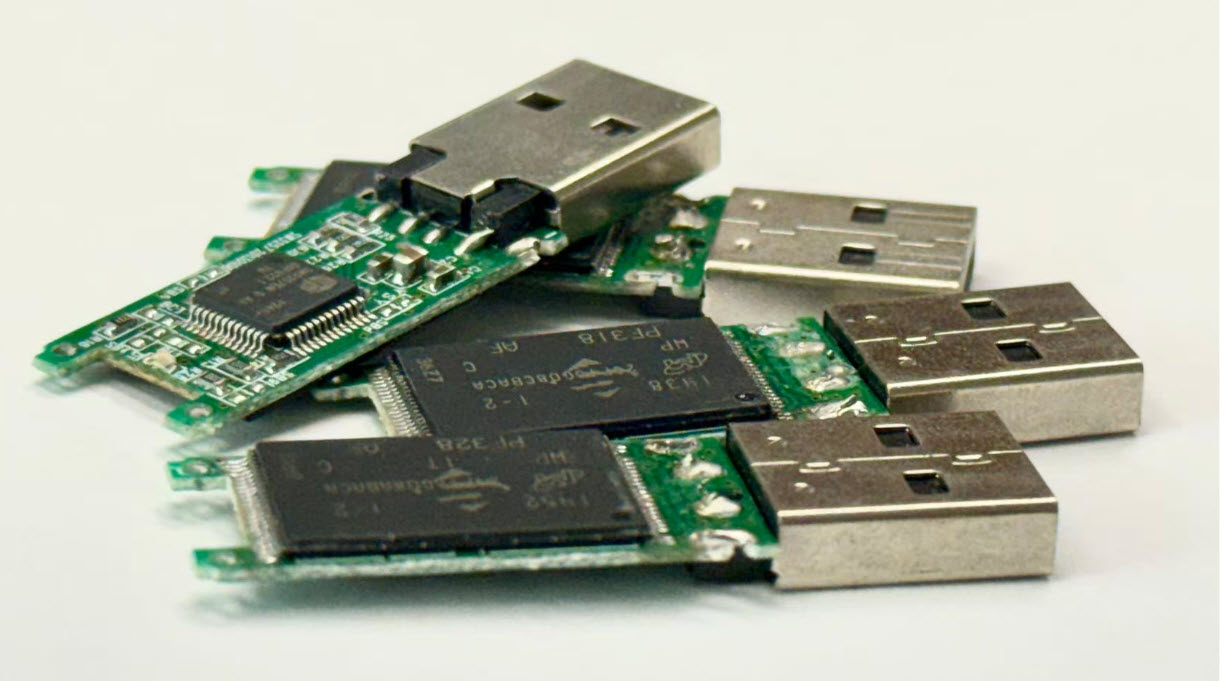
A customer places an order for USB flash drives. The samples were approved. The controller was chosen. Capacity, performance, and cost all look fine. Then somewhere between quoting and production, the factory comes back with a revision:
“We want to switch the NAND.”
Maybe the original plan was Micron and now they want to use Intel-origin NAND. Maybe it is Kioxia to SK hynix. Maybe the explanation sounds simple: same capacity, same function, no issue.
That kind of change is not automatically a problem. In manufacturing, memory substitutions happen for real reasons. Supply gets tight. Lead times move. Pricing shifts. A preferred lot dries up. Sometimes the replacement is perfectly acceptable and the finished product performs exactly as expected.
Here’s the point: a NAND brand swap should never be treated like a casual purchasing note. It is a specification change.
That does not mean the customer should panic. It means the customer should ask better questions.
The first thing to understand is this: the brand name on the NAND is only one layer of the story. Two USB drives can both be sold as 64GB products, both work on day one, and still behave very differently in the field depending on the NAND generation, controller pairing, firmware tuning, lot consistency, and sourcing path behind the build.
So if a factory wants to move from Micron to Intel, or from one memory supplier to another, the smart response is not yes or no. The smart response is: tell me exactly what is changing.
Why Factories Request NAND Substitutions
This is normal manufacturing behavior. Flash memory is a commodity component, and the market moves around more than many buyers realize. A factory may be trying to hold your price, protect delivery, or work around a shortage. In some cases, the substitute memory may be every bit as good for the application. In other cases, the substitute may be older stock, a different NAND type, or a part that requires new qualification work.
That is why the request itself is not the red flag. The lack of detail is the red flag.
A careful factory should be able to explain the change clearly. A sloppy factory usually hides behind broad language like “equivalent memory” or “same spec.” Chances are, if that is all they can offer, they have not given the change the engineering review it deserves.
Brand Names Alone Do Not Tell You Enough
Micron and Intel are useful examples because most buyers recognize the names. Both have strong reputations in memory history, and both names can sound reassuring in a sourcing conversation. But the customer still needs more than a recognizable brand.
For example, “Intel memory” might mean older Intel-era inventory still moving through the market. It might mean Intel-origin technology that later moved under different corporate ownership. It might also just be factory shorthand that is too loose to evaluate properly. None of those possibilities are automatically bad. They are just different, and “different” needs to be documented.
The same goes for Micron. Seeing Micron on a parts list does not magically answer questions about endurance, lot date, controller compatibility, or long-term supply.
Bottom line: the label is not the qualification plan.
What the Customer Should Actually Ask
Here is the checklist a buyer, engineer, or product manager should walk through before approving a NAND substitution.
| ✓ | What to Ask | Why It Matters |
|---|---|---|
| | What is the exact NAND part number being proposed? | Brand alone is too vague. The actual part number tells you what memory is really on the table. |
| | Is this new original stock, legacy stock, or broker-sourced inventory? | Traceability matters. A good part with poor sourcing can still create reliability problems. |
| | What NAND type is it: SLC, MLC, TLC, or QLC? | Different NAND types have different cost, endurance, and performance behavior. |
| | What controller will be paired with this NAND? | USB drive performance and stability depend heavily on the controller-memory match. |
| | Has firmware been adjusted for this new NAND? | A memory swap without firmware tuning can cause inconsistent performance or compatibility issues. |
| | Are there updated qualification results for speed, compatibility, and data integrity? | If the part changed, the test data should change too. |
| | What is the lot code and date code range? | This helps identify whether the memory is fresh production or older market inventory. |
| | Will endurance, retention, or write behavior change from the original design? | Same capacity does not mean same lifecycle behavior. |
| | Is the substitute memory already in mass production for other customers? | A field-proven substitution is usually less risky than a one-off sourcing experiment. |
| | Can the factory guarantee continuity of supply for future builds? | A one-time substitution may solve today’s problem but create a new one next quarter. |
| | Can we test samples before approving the revision? | Sample validation is the cleanest way to confirm the change meets expectations. |
| | Will the factory document the substitution in the build record or approval file? | If it is worth changing, it is worth documenting. |
The Best Factories Do Not Resist These Questions
A good factory should not get defensive when a customer asks for this level of detail. In fact, a capable manufacturing partner should welcome it. These are not hostile questions. They are professional questions.
If a supplier can tell you the exact NAND part, explain why it was selected, show qualification results, and provide samples, that is a healthy sign. It suggests the change was reviewed properly and not just pulled from whatever happened to be available in the channel that week.
On the other hand, if the answers stay fuzzy, that tells you something too.
“We have used it before” is not documentation.
“It is the same quality” is not a test report.
“Do not worry” is not an engineering conclusion.
When a Substitution Is Probably Low Risk
A NAND substitution can be low risk when the factory is transparent, the part is traceable, the controller pairing is understood, and the revised build has been tested against the original requirements.
In that case, the change may be nothing more than good supply-chain management. The customer still reviews it, signs off on it, and moves on.
That is how this should work.
When the Customer Should Slow Things Down
The situation deserves a harder look when the factory cannot provide the exact part number, cannot explain the sourcing path, cannot show test data, or pushes for approval without sample validation.
That does not prove the substitute is bad. It does suggest the change is not being managed with enough discipline.
And when you are building a USB product that carries your name, that distinction matters.
The Takeaway
When a factory wants to change the NAND brand in your USB drive, the right response is not fear and it is not blind trust. It is review.
Micron to Intel may be perfectly fine. Intel to Micron may be perfectly fine. One reputable brand swapped for another is not the issue by itself. The issue is whether the factory can show that the replacement memory will meet the same expectations for performance, reliability, and continuity.
Put simply, a NAND substitution is not just a sourcing note. It is a product change.
Treat it that way.
Tags: controller compatibility, flash memory sourcing, NAND flash, USB drive quality, USB manufacturing